What God is Saying

"Look at the nations and watch—and be utterly amazed. For I am going to do something in your days that you would not believe, even if you were told." Habakuk 1:5

Showing posts with label Christian history. Show all posts

Monday, December 15, 2025

The Real Saint Nicholas: From Defender of the Faith to Santa Claus

Hello, friends, and welcome back to Nations 4 Jesus. As we approach Christmas, I want to tell you a story that might surprise you. It's about a man whose name you know, whose legend fills our shopping malls and Christmas cards, but whose true story has been almost completely forgotten.

This is the story of Saint Nicholas of Myra—a radical defender of Christian Biblical truth, a fearless protector of the innocent, and a man whose generosity was so legendary that his name became synonymous with gift-giving for over 1,700 years.

But here's what most people don't know: before he became remembered only as the jolly figure in a red suit, Nicholas was a bishop who may have physically confronted a heretic at the Council of Nicaea for denying the divinity of Christ.

Let me take you back to the third century.

Saint Nicholas was a real, historically attested Christian bishop. This is not a legend invented by medieval monks. This is not a baptized pagan god. This was a real man who lived, breathed, and served Christ with extraordinary courage.

He was born around AD 270 in Patara, which is in Lycia—modern-day Turkey. He died around AD 343. He served as Bishop of Myra during one of the most dangerous periods in Christian history—the Diocletian persecutions.

Think about what that means. Nicholas lived when being a Christian could get you tortured, imprisoned, or killed. Being a bishop meant you had a target on your back. The Roman Empire was systematically trying to eradicate Christianity.

But Nicholas didn't hide. He didn't compromise. He stood firm.

He became known for four things: radical generosity, defense of the poor, protection of children, and fierce defense of Christian truth.

And here's what's remarkable—he was revered within a generation of his death. This isn't a saint manufactured centuries later for political reasons. This is a man whose impact was so immediate and so powerful that the early church couldn't stop talking about him.

Now, let me address the question many people ask: Was Saint Nicholas at the Council of Nicaea in AD 325?

Short answer: Very likely yes, though some of the details are debated.

The Council of Nicaea (AD 325) is one of the most important events in the history of Biblical Christianity because it settled the foundational question of who Jesus is. Faced with the Arian controversy—which claimed Jesus was a created being and not fully divine—the council affirmed what Scripture teaches: that the Son is eternally God, “of the same substance” with the Father. This preserved the core truth of the gospel, safeguarded the doctrine of the Trinity, and unified the early Church around a clear confession of Christ’s true nature. Without Nicaea, Christianity would lack one of its essential anchors for understanding Jesus, salvation, and the identity of the Church itself.

Back to Nicholas…he was a bishop in Asia Minor, the very region that was heavily represented at the Council of Nicaea. Early church tradition consistently associates him with Nicaea. He's listed in some later episcopal attendance records, though not all early lists have survived.

But there's a famous incident that tradition tells us about—and this is where it gets really interesting.

The story goes that Nicholas became so outraged by Arius's denial of Christ's divinity that he struck Arius during the council.

Let me give you some context. Arius was teaching that Jesus was a created being—not fully God, not co-eternal with the Father. This was a direct assault on the doctrine of the Trinity. This was heresy that threatened the very foundation of Christianity.

The Council of Nicaea was called specifically to address this crisis. Bishops from across the Roman Empire gathered to defend the truth that Jesus Christ is fully God, of the same substance as the Father.

And according to tradition, Nicholas—this gentle, generous bishop known for his love and charity—heard Arius speak, heard him blaspheme the Son of God, and could not contain himself.

He walked across the room and struck him.

Now, let me be clear about what happened next. Nicholas was temporarily censured for this action. The other bishops said, "You can't just hit people during a church council, even if they're heretics." His bishop's vestments were taken from him. He was temporarily removed from his position.

The bishops later reinstated him.

Now, whether or not Nicholas literally struck Arius, he was remembered as a fierce defender of the Trinity. That's why he became associated with Nicaea at all. You don't get that reputation by accident.

But Nicholas wasn't just known for his theological defense. He was known for his godly actions, particularly his radical generosity to the poor.

Let me tell you the most famous story, and this one is attested very early in church history.

There was a poor man in Myra who had three daughters. In that culture, daughters needed dowries to marry. Without a dowry, they couldn't find husbands. And without husbands, they faced either poverty or being sold into slavery or prostitution.

This father was desperate. He had no money. His daughters had no future.

Nicholas heard about this situation, and he did something remarkable. He secretly threw bags of gold through the window of their house at night.

One bag for each daughter. Enough to provide their dowries. Enough to save them from a terrible fate.

He did this anonymously. He didn't want recognition. He didn't want thanks. He just wanted to help.

This story is directly attested in early sources, and friends, this is the true root of Santa's chimney gifts. This is where the tradition of anonymous gift-giving comes from—from a Christian bishop who took Matthew 6:3 seriously.

Jesus said, "When you give to the needy, do not let your left hand know what your right hand is doing, so that your giving may be in secret."

Nicholas lived that out literally.

But that wasn't the only story. Other early traditions describe Nicholas saving unjustly condemned men from execution, intervening against corrupt officials, protecting sailors during storms, and defending children from abuse or exploitation.

Nicholas was known as a bishop who acted, not merely taught. He didn't just preach about charity—he practiced it. He didn't just talk about justice—he pursued it.

Now, let me trace for you how Saint Nicholas became Santa Claus, because this happened in layers, not all at once.

Phase 1: Saint Nicholas, 4th to 10th centuries.

His feast day was December 6th. He was celebrated across the Christian world—East and West, Catholic and Orthodox. Children received small gifts in his name, but the emphasis was on charity, secrecy, and holiness.

Nicholas was honored as a saint who embodied Christian virtue.

Phase 2: Sinterklaas in the Netherlands, 11th to 16th centuries.

Dutch Christians preserved Nicholas devotion even during the Reformation. The name became Sinterklaas. He was depicted wearing bishop's robes—still recognizably a church figure. He arrived by boat, judged children's behavior, and gave gifts quietly.

This is the direct linguistic ancestor of "Santa Claus." Say "Sinterklaas" fast enough and you'll hear it.

Phase 3: America, 17th to 19th centuries.

Dutch settlers brought Sinterklaas to New Amsterdam, which became New York. English speakers transformed the name into Santa Claus.

Then in 1823, the poem "A Visit from St. Nicholas"—you know it as "'Twas the Night Before Christmas"—reshaped him completely. Now he had a flying sleigh, reindeer, and visited through chimneys.

He was still benevolent, still generous, but now more folkloric than Christian. The church connection was fading.

Phase 4: Commercial Santa, 20th century.

Illustrators like Thomas Nast gave him a specific look. Advertisers—notably Coca-Cola—standardized his red suit and jovial appearance.

Santa became detached from Christianity. He became a secular symbol of generosity and childhood wonder.

This is where the spiritual core was stripped away—not earlier.

So let me be clear about what did NOT happen, because there's a lot of misinformation out there.

Saint Nicholas did not originate as a pagan god. Santa Claus is not a corruption of Christ or Satan. Nicholas was not invented by Rome or medieval myth-makers. His generosity was not fictional.

Santa Claus is a secularized descendant of a Christian saint, not a replacement deity.

Now, here's what I find most beautiful about Nicholas's story.

The theological heart of Saint Nicholas was Matthew 6 Christianity. "Do not let your left hand know what your right hand is doing."

He believed that wealth exists to serve the poor. That children are sacred. That Christ is fully God. That Christianity and charity must coexist.

You cannot separate Nicholas's theology from his generosity. His fierce defense of Christ's divinity at Nicaea and his secret gifts to poor families were two sides of the same coin.

He believed Jesus was God—and therefore he lived like Jesus, serving the least of these.

That is why Nicholas endured long after emperors, councils, and regimes faded. Not because he was a good mythological character, but because he was a genuine Christian whose life reflected Christ. In fact, as believers, we will get to meet him in Heaven one day!

So what does this mean for us today?

Friends, I think we need to reclaim the real Nicholas. Not to ruin Christmas or spoil childhood wonder, but to recover something precious that's been lost.

When we reduce Nicholas to a jolly elf who rewards good behavior with toys, we've lost a defender of truth, a protector of the vulnerable, a man who risked everything for Christ.

Our children need to know that generosity isn't just about feeling good—it's about radical sacrifice for those who can't repay you.

They need to know that defending truth matters, even when it costs you.

They need to know that real love looks like a bishop throwing bags of gold through windows to save girls from slavery.

Let me ask you some questions. How are you embodying Nicholas's secret generosity this Christmas? Are you giving in ways that don't bring you recognition? Are you helping people who can't possibly repay you?

And how are you defending the truth about who Jesus is? Are you willing to stand firm on the divinity of Christ, even when it's unpopular?

Nicholas would have never compromised on either of these things—radical generosity and radical Christianity went hand in hand for him.

So this Christmas, as your children talk about Santa, tell them about Nicholas. Tell them about the real man who loved Jesus so much he couldn't stay silent when people attacked His divinity. Tell them about the bishop who gave everything away because he believed Jesus was worth it.

Let me pray

Thank you for joining me today. The story of Saint Nicholas reminds me that our faith is rooted in real people who lived real lives of extraordinary courage and generosity.

Until next time, keep your eyes on the nations, give generously and secretly, and remember—the best gifts come from those who know the greatest Gift of all.

Merry Christmas, friends.


You can listen to this as a podcast at Spotify podcast


Friday, December 12, 2025

Saint Lucia's Day: From Ancient Martyr to Swedish Tradition and Missionary Legacy

Hello, and welcome back to Nations 4 Jesus. Today I want to share something that's very special to me—the story of Saint Lucia’s (Loo See A) Day. When our family lived in Hungary from 2011-2015 with the U.S. Air Force, we had many wonderful Swedish friends who introduced us to the beauty of Saint Lucia Day traditions. The songs, the candles, the special food—it was such a wonderful way to begin the Christmas season, and it opened my eyes to a rich Christian history I'd never known.

But Saint Lucia's Day is more than just a beautiful Scandinavian tradition. It's a story that connects a 3rd century Christian martyr in Sicily to the powerful missionary movement that once came out of Sweden. It's a story of light shining in darkness, of faithfulness unto death, and of how one nation went from paganism to Christianity to becoming one of the world's great missionary-sending forces.

Today I want to tell you about Saint Lucia of Syracuse, about how her story became intertwined with Swedish Christianity, about Sweden's remarkable missionary legacy, and about both the challenges and the small signs of hope in Swedish Christianity today.

Let me start at the beginning with Saint Lucia herself. Lucia—whose name means "light"—was born around 283 AD in Syracuse, Sicily, into a wealthy Christian family. This was during the reign of Roman Emperor Diocletian, who launched one of the most severe persecutions of Christians in Roman history.

According to early church tradition, Lucia had consecrated her virginity to God and wanted to devote her life to serving Christ. But her mother, Eutychia, who didn't know about Lucia's vow, arranged for her to marry a pagan nobleman. Lucia prayed for a way out of this marriage, and when her mother was miraculously healed of a hemorrhage after they visited Saint Agatha's tomb together, Lucia convinced her mother to allow her to distribute her dowry to the poor instead of marrying.

But here's what makes Lucia's story particularly relevant to our focus on missions and the persecuted church: During the Diocletian persecution, when Christians were being hunted and killed, many believers were forced to hide in the catacombs beneath Rome and other cities. These underground believers were hungry, scared, and desperate for encouragement.

Lucia took it upon herself to bring food to these hiding Christians. She would go down into the dark catacombs carrying supplies, and to keep her hands free to carry as much as possible, she wore a wreath of candles on her head to light her way. Can you imagine the courage that took? She was risking her own life to feed believers who were being hunted by the Roman authorities.

When Lucia's rejected suitor discovered that she had given away her dowry and was serving Christians, he reported her to the Roman authorities as a Christian. She was arrested and ordered to renounce her faith and offer sacrifice to the Roman gods. Lucia refused, declaring that she would never deny Christ.

According to tradition, the authorities tried to force her into prostitution, but miraculously she could not be moved—it was as if she was rooted to the ground. They tried to burn her, but the flames would not harm her. Finally, they killed her with a sword on December 13, 304 AD. She was only about 21 years old. As she lay dying, she prophesied that persecution would soon end and peace would come to the church—a prophecy that was fulfilled when Constantine legalized Christianity just a few years later.

Now here's why the date matters for understanding the Swedish tradition. December 13th, according to the old Julian calendar used when this tradition developed, was considered the winter solstice—the longest, darkest night of the year. So Lucia's feast day on December 13th became associated with bringing light into darkness, which perfectly matched her name and her story of wearing candles to bring food to Christians hiding in dark catacombs.

This symbolism of light conquering darkness resonated deeply in Scandinavia, where winter nights are extraordinarily long. In northern Sweden, the sun barely rises in December, and darkness dominates. So the image of a young woman wearing a crown of candles, bringing light and sustenance in the darkest season, became incredibly meaningful.

So how did Saint Lucia's story travel from Sicily to Sweden? To understand that, we need to look at how Christianity came to Scandinavia. Christianity reached Sweden relatively late compared to southern Europe. The first known Christian missionary to Sweden was Saint Ansgar, a Frankish monk who arrived around 829 AD. But Sweden remained largely pagan for centuries afterward, with the old Norse gods still dominant.

It wasn't until the 11th and 12th centuries that Sweden gradually converted to Christianity, often through a mix of missionary efforts, royal conversions, and sometimes force. By the 13th century, Sweden was officially a Christian nation, and Catholic traditions—including veneration of saints like Lucia—became part of Swedish culture.

The tradition of celebrating Saint Lucia's Day on December 13th took root in Sweden during the Middle Ages. Swedish families would observe the day with special foods, and the legend of Lucia bringing food in darkness particularly resonated in a land where winter darkness was so oppressive. Over time, uniquely Swedish customs developed around the celebration.

Let me describe what the modern Swedish Lucia celebration looks like, based on what our Swedish friends in Hungary taught us. On the morning of December 13th, the oldest daughter in the family dresses in a white robe with a red sash, symbolizing Lucia's purity and martyrdom. She wears a crown of candles on her head—today usually battery-powered for safety, but traditionally real candles.

She wakes the family early in the morning, often around 4 or 5 AM when it's still dark, carrying a tray of special saffron buns called "lussekatter" (Lucia cats) and coffee. She's often accompanied by younger siblings dressed as attendants—girls in white with tinsel in their hair, and boys dressed as "star boys" wearing cone-shaped hats.

They sing traditional Lucia songs, the most famous being "Sankta Lucia" set to the beautiful Neapolitan melody "Santa Lucia." The lyrics celebrate Lucia as a light-bringer in the darkness. When our Swedish friends invited us to their Lucia celebration in Hungary, I'll never forget how moving it was—the night time downtown setting, the candles glowing, the sweet voices singing, the aroma of saffron buns. It was a beautiful way to mark the beginning of the Christmas season and remember that Jesus is the Light of the world who came into our darkness.

Now here's what's remarkable: Sweden, which received the Gospel through missionaries like Saint Ansgar in the 9th century, became one of the world's great missionary-sending nations. By the late 19th and early 20th centuries, Swedish missionary societies were sending thousands of missionaries around the world.

Swedish missionaries served in China, India, Africa, and many other places. Organizations like the Swedish Evangelical Mission, the Swedish Alliance Mission, and others sent workers to some of the hardest, most remote mission fields. Swedish missionaries were known for their commitment, their willingness to learn local languages, and their emphasis on both evangelism and social service—education, healthcare, agricultural development.

At its peak in the mid-20th century, Sweden—with a population of only about 7-8 million—was sending out thousands of missionaries. Swedish mission organizations pioneered work among several unreached people groups. Swedish Christians gave generously to support missions, and many Swedish young people considered missionary service as a normal calling to consider.

One thing that's unique about Sweden, even today, is that Christianity and church history are taught as part of the regular school curriculum. Swedish students learn about the Bible, Christian traditions, and church history—including stories like Saint Lucia—as part of their education. Even in public schools, students study Christianity not as religious indoctrination, but as cultural heritage and historical literacy.

This means most Swedes, even if they're not practicing Christians, have a basic knowledge of Christian history, biblical stories, and traditions like Saint Lucia's Day. They understand the symbolism, they know the songs, they participate in the celebrations—even if they don't personally have faith in Christ. It's woven into the cultural fabric of Swedish identity.

But here's the heartbreaking part: Despite this rich Christian heritage, despite once being one of the world's great missionary-sending nations, Sweden today is one of the most secular countries on earth. According to recent surveys, only about 20% of Swedes believe in a personal God. Weekly church attendance is estimated at less than 5% of the population. The Church of Sweden, once a powerful state church, has seen dramatic decline—many historic churches now sit largely empty except for tourists.

What happened? How did a nation that sent thousands of missionaries to the ends of the earth become so secular in just a few generations? Several factors contributed: the official state church became increasingly liberal theologically, often accommodating cultural trends rather than proclaiming biblical truth. Prosperity and social welfare programs created a sense that people didn't need God—the government would provide for all needs. Education became increasingly secular. And perhaps ironically, the very success of Christian social ethics created a society that felt it could maintain Christian values without Christian faith.

As Swedish Christianity declined, so did the missionary movement. The thousands of missionaries Sweden once sent dwindled to hundreds. Mission organizations merged or closed. Young Swedes stopped considering missionary service. The churches that had once supported missions generously now struggled to keep their own doors open.

It's a sobering reminder that even the strongest Christian movements can decline within a generation or two if faith isn't passed on vibrantly to the next generation. Sweden went from sending missionaries to needing missionaries in less than a century.

But here's where I want to inject some hope, because God is not done with Sweden! Despite the overall decline, there are genuine believers in Sweden—a faithful remnant who love Jesus, who pray, who share their faith, who send missionaries. There are small but growing immigrant churches, particularly among Ethiopians, Eritreans, and other African Christians who've brought vibrant faith to Sweden.

There are also some signs of renewed interest in Christianity among young Swedes, particularly as they see the emptiness of pure secularism. Some Swedish young people are rediscovering the faith of their grandparents. Small house church movements are growing. And interestingly, some Swedes who encounter vibrant Christianity while traveling or living abroad—like our Swedish friends in Hungary—return home with renewed faith and vision.

There are also Swedish Christians working to revitalize the missionary movement. While the numbers are smaller than they once were, there are still Swedish missionaries serving in hard places, and some Swedish churches are rediscovering their missionary heritage and calling.

So what can we learn from Sweden's story? First, past missionary success doesn't guarantee future faithfulness. Sweden was once a missionary powerhouse, but that legacy didn't automatically preserve Swedish Christianity. Each generation must embrace faith for themselves.

Second, prosperity can be more dangerous to faith than persecution. Sweden's high standard of living, comprehensive welfare state, and comfortable lifestyle made it easy for Swedes to feel they didn't need God. We in America should take warning—our prosperity may be eroding our faith just as it did Sweden's.

Third, state churches can become spiritually dead. When the church is too closely aligned with government and culture, it often loses its prophetic voice and biblical distinctiveness. The Church of Sweden accommodated cultural trends rather than calling people to biblical faith.

Fourth, teaching Christian history and traditions isn't enough if personal faith isn't cultivated. Swedish students learn about Saint Lucia and Christian heritage, but knowledge about Christianity is different from knowing Christ. We can't rely on cultural Christianity—we need genuine conversion and discipleship.

And fifth, immigrant Christians can revitalize declining churches. God is bringing believers from Africa and other places to Sweden, and these believers are breathing new life into Swedish Christianity. This is part of how God is humbling the Western church and showing us that the Global South church is now the vibrant center of Christianity.

But perhaps the most important lesson comes from Saint Lucia herself. She lived in one of the darkest periods of Christian history—the Diocletian persecution, when being a Christian could mean torture and death. Yet she brought light into that darkness, literally and figuratively. She risked her life to feed hungry Christians hiding in catacombs. She refused to deny Christ even when it cost her everything. She became a light that has shone for 1,700 years, inspiring millions.

Today, Sweden may be in spiritual darkness, but Saint Lucia's example reminds us that one faithful light-bearer can make a difference. It only takes a few faithful believers, willing to risk everything for Christ, to spark revival. The light shines in the darkness, and the darkness has not overcome it—just as Jesus promised in John 1:5.

When our Swedish friends in Hungary invited us to celebrate Saint Lucia's Day with them, I don't think I fully understood the weight of what I was experiencing. Here were Swedish friends, living as expatriates in a foreign country, keeping alive a tradition that connected them to their Christian heritage—a heritage that much of Sweden has abandoned.

As they sang "Sankta Lucia" in the candlelight, as they shared saffron buns and coffee in the darkness, they were doing exactly what Lucia herself did 1,700 years ago—bringing light and sustenance in a dark time. Each year that my family and I celebrated with them, I was remembering that Jesus is the Light of the world, no matter how dark the culture around us becomes.

So here's my challenge to you: Don't take your Christian heritage for granted. Don't assume that because your nation was once Christian, it will remain Christian. Each generation must embrace faith personally and pass it on passionately to the next. Pray for Sweden and other nations in Europe that have lost their Christian vitality. Support the faithful remnant there. And consider supporting Swedish missionaries who are still serving in hard places.

And as we approach Christmas, remember what Saint Lucia's Day teaches us: Jesus came as the Light of the world into the darkness of our sin. Just as Lucia wore candles on her head to bring food to hungry Christians in dark catacombs, Jesus came into the darkness of this fallen world to bring us the Bread of Life. Let's be light-bearers like Lucia, willing to risk everything to bring Christ to those in darkness.

Thank you for joining me today. I hope Saint Lucia's story and Sweden's history have both challenged and inspired you. The light shines in the darkness—and we're called to be bearers of that light.

Until next time, remember—keep your eyes on the nations and be a light-bearer in the darkness!


You can listen to this in podcast form at Spotify podcast

Sunday, March 17, 2024

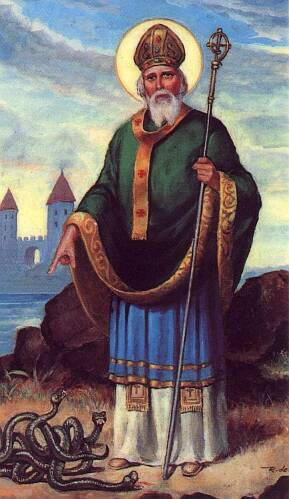
Who Was St. Patrick?


Today many people will remember St. Patrick. This day is special for me since my great-great-grandmother was from Ireland and my grandma, Esther, went home to be with Jesus on St. Patrick's Day. But it has also become special to me since I have learned the incredible story of St. Patrick! 

Below is the story of St. Patrick:


St. Patrick: From Slave to Saint
by Grainne Rowland

"Watch out! Hide! Here come the raiders!" My family's servants were screaming and running for cover. I watched in horror as my father's land and house were overrun. The raiders came with the Irish king, Niall of the Nine Hostages.

Suddenly, I was grabbed from behind, tied up, and roughly pushed towards a waiting ship. I, Succat, was being taken as a slave!

I struggled to get free. I thought of how angry my father would be when he learned that his son had been kidnapped. My father was the most powerful man in that part of Britain. Surely he would rescue me!

I was thrown on board the ship with the other captives. The ship quickly sailed away. The raiders began to celebrate their successful attack. I  knew then there would be no rescue. I was only sixteen years old.

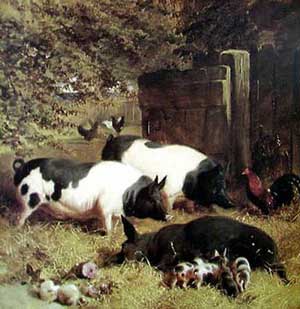
In Ireland, I was sold to Miliucc, a chieftain in Co. Antrim. I was forced to herd pigs in cold and rainy weather. I was hungry, wet, and shivery with cold. Always, I was lonely.

I was a slave for six long years. I learned the Irish language and the customs of the Irish people. I also learned to pray.

One night in a dream, I heard a voice say, "Behold, your ship is ready." I woke up and knew my chance to escape had arrived! I began my long walk to freedom.

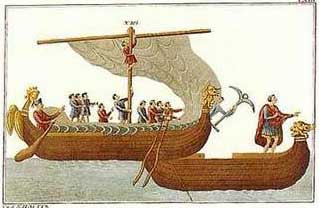
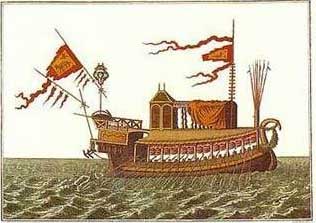
After many days, I reached Wexford, 200 miles away. I found a ship nearly ready to sail. But the captain was searching for someone to care for a pack of Irish wolfhounds on the journey. I was just the person! I was on my way home!

The ship landed in northern Gaul, where there was only desert. For many days, we wandered in that desert. We found no food. The sailors made fun of my God. They asked why He didn't send us food. So I prayed. To the sailors' surprise, a large herd of pigs came into sight, squealing and grunting. It was enough meat for not only the men, but all the wolfhounds as well!

On the day I walked into my home again, my mother and father ran to hug me. They both talked at once and asked question after question, never giving me time to answer. That night, I was the guest at a huge party. I was given many gifts.

During the next few years, I studied in several places. I finally became a priest. It was then that I was given the name Patrick.

One night, I had another dream. I saw the people of Ireland. They pleaded with me, saying, "We beg you, holy youth, to come and walk among us once more." I knew I must return to Ireland.

When I arrived back in Ireland, I first went to Tara, the home of Irish kings. I asked King Leary's permission to preach in the country. He agreed and I began to travel throughout Ireland. I brought many people to the Christian faith.

In about the year 441, I spent 40 days alone on a rocky, windy mountain praying for the Irish people. The mountain is now known as Croagh Patrick, or the Mountain of Patrick.

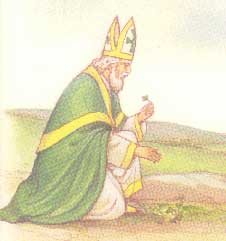
One day, I was telling the people about God. They did not understand. So I picked a shamrock and showed them that there are three leaves but only one plant. Then the people could better understand that the Father, Son, and Holy Spirit make only one God. That is why, when you see a picture of me, I am usually holding a shamrock.

I trained new Irish priests, and they learned many things. They knew how to copy and beautifully decorate the Bible and other books. They copied everything by hand and made paint from plants and minerals. In later years, the people of Europe forgot about learning. The Irish monks and scholars kept copying books and kept important knowledge alive.

Not long before I died, I built a large stone cathedral in the town of Armagh. I also had a school built there. It later became a famous university.

I died on March 17, 493, in the town of Saul, in Co. Down. This was the same place I had built my first church.

Many towns wanted the honor of giving me a burial place. So my body was put on a wagon drawn by two oxen. The oxen pulled the cart to the town of Downpatrick. There I was buried.

My body lies in a cemetery next to the Downpatrick Cathedral. The grave is marked by a large granite stone and the name Patrick.

After St. Patrick died, Ireland was used greatly by God to keep Christianity alive in Europe during the Middle/Dark Ages. At a time when there was much corruption in the Church in Europe and when very few people knew how to read so that it was difficult to spread the Gospel, the Irish/Celtic Church sent out many missionaries and helped preserve the Christian religion through its monasteries. This early Celtic Church flourished with many monks and priests leaving Ireland to begin missions in Europe. In the first two hundred and fifty years after Patrick's death, around five hundred Irish saints were recognized. These missionaries established monasteries in Scotland, England, Switzerland, France, Germany and as far south as Italy.

We have much to be grateful for in the lasting Christian heritage and legacy of Patrick and Ireland!

Friday, December 29, 2023

The Cosmic Battle for Humanity


What happened in Bethlehem (Herod's murder of all baby boys two years old and under - Matthew 2:16), was yet another stage in the conflict God had announced in Genesis 3:15. 

And I will put enmity (warfare)

    between you and the woman,

    and between your offspring and hers;

He will crush your head,

    and you will strike His heel.”

The seed/offspring of the serpent would oppose and eventually seek to crush the seed of the woman. The story that began in Genesis 3:15 was now running on through Matthew 2:1-17 and 16:18 to its climax. John saw this conflict in dramatic and symbolic form in the book of Revelation: 

1 A great sign appeared in heaven: a woman clothed with the sun, with the moon under her feet and a crown of twelve stars on her head. 2 She was pregnant and cried out in pain as she was about to give birth. 3 Then another sign appeared in heaven: an enormous red dragon with seven heads and ten horns and seven crowns on its heads. 4 Its tail swept a third of the stars out of the sky and flung them to the earth. The dragon stood in front of the woman who was about to give birth, so that it might devour her child the moment he was born. 5 She gave birth to a son, a male child, who “will rule all the nations with an iron scepter.” And her child was snatched up to God and to his throne.

The "great red dragon" was "that ancient serpent, who is called the devil and Satan, the deceiver of the whole world" (v 9). And now, in the real-time version of John's vision, the Child had been born. The coming of the wise men was the first hint that the undeceiving of the nations had begun. And so the evil one let loose his lieutenant, King Herod, against the Child. 

We now live at a different point of John's vision: "The dragon became furious with the woman and went off to make war on the rest of her offspring, on those who keep the commandments of God and hold to the testimony of Jesus" (v 17). 

Perhaps as you look at the world around you today, it feels as though the dragon must be winning - as Christians around the world suffer attack and harassment, as non-Christians hear the Gospel yet remain blind to the message, and as Satan accuses and tempts you on the battleground of your own heart. Yet however fierce the heat, hold onto our Savior's promise: "I will build My Church, and the gates of Hell will not overcome it" (Matthew 16:18). 

Taken from The Dawn of Redeeming Grace by Sinclair B. Ferguson

Saturday, April 15, 2023

How the Disciples of Jesus died


1. Matthew. Suffered martyrdom in Ethiopia, Killed by a sword wound.

2. Mark. Died in Alexandria, Egypt , after being dragged by Horses through the streets until he was dead.
3. Luke. Was hanged in Greece as a result of his tremendous Preaching to the lost.
4. John. Faced martyrdom when he was boiled in huge Basin of boiling oil during a wave of persecution In Rome. However, he was miraculously delivered From death.
John was then sentenced to the mines on the prison Island of Patmos. He wrote his prophetic Book of Revelation on Patmos . The apostle John was later freed and returned to serve As Bishop of Edessa in modern Turkey . He died as an old man, the only apostle to die peacefully
5. Peter. He was crucified upside down on an x shaped cross. According to church tradition it was because he told his tormentors that he felt unworthy to die In the same way that Jesus Christ had died.
6. James. The leader of the church in Jerusalem , was thrown over a hundred feet down from the southeast pinnacle of the Temple when he refused to deny his faith in Christ. When they discovered that he survived the fall, his enemies beat James to death with a fuller's club.
This was the same pinnacle where Satan had taken Jesus during the Temptation.
7. James the Son of Zebedee was a fisherman by trade when Jesus Called him to a lifetime of ministry. 
As a strong leader of the church, James was beheaded at Jerusalem. The Roman officer who guarded James watched amazed as James defended his faith at his trial. 
Later, the officer Walked beside James to the place of execution. Overcome by conviction, he declared his new faith to the judge and Knelt beside James to accept beheading as a Christian.
8. Bartholomew. Also known as Nathaniel. He Was a missionary to Asia. He witnessed for our Lord in present day Turkey. Bartholomew was martyred for his preaching in Armenia where he was flayed to death by a whip.
9. Andrew. He Was crucified on an x-shaped cross in Patras, Greece. After being whipped severely by seven soldiers they tied his body to the cross with cords to prolong his agony. 
His followers reported that, when he was led toward the cross, Andrew saluted it in these words, "I have long desired and expected this happy hour. The cross has been consecrated by the body of Christ hanging on it". He continued to preach to his tormentors For two days until he expired.
10. Thomas. He Was stabbed with a spear in India during one of his missionary trips to establish the church in the Subcontinent.
11. Jude. He Was killed with arrows when he refused to deny his faith in Christ.
12. Matthias. The apostle chosen to replace the traitor Judas Iscariot. He was stoned and then beheaded.
13. Paul. He Was tortured and then beheaded by the evil Emperor Nero at Rome in A.D. 67. Paul endured a lengthy imprisonment, which allowed him to write his many epistles to the churches he had formed throughout the Roman Empire. These letters, which taught many of the foundational Doctrines of Christianity, form a large portion of the New Testament. 
Perhaps this is a reminder to us that our sufferings here are indeed minor to compare to the intense persecution and cold cruelty faced by the apostles and disciples during their times For the sake of the Faith.
And ye shall be hated of all men for my name's sake: But he that endureth to the end shall be saved.
Pass on to encourage other Christians. Why Do we feel sleepy in Prayer, but stay awake through a 3 hour movie?
Why are we so bored when we look at the HOLY BOOK. But find it easy to read other books?
Why is it so easy to ignore a message about God,
Yet we forward the nasty ones?
Why are Prayers getting smaller, but bars and clubs are expanding.
Why is it so easy to worship a celebrity, but very difficult to engage with God?